ERP systems
One system of record for finance, inventory and operations.
Finance, procurement, inventory and sales in one connected system, configured around how your organisation actually works.
Overview
When finance, stores and sales each keep their own spreadsheets, month-end becomes reconciliation work and decisions wait for numbers nobody fully trusts.
We implement and build ERP systems that put core transactions in one place, with clear approval flows, audit trails and reports that come from the same data your teams work with every day.
Modules
15 modules, one system
All of it shares the same records, the same access control and the same audit trail. Start with the modules you need and switch the others on as you grow into them.
General ledger
Chart of accounts, journals and period close. Every posting traces back to the document that created it.
Accounts receivable
Customer invoices, receipts, credit notes and statements, with an ageing view per customer.
Accounts payable
Supplier invoices matched to orders and goods received, payment runs and supplier ageing.
Bank and cash
Bank and mobile money accounts, statement import, reconciliation and petty cash.
Tax
VAT on sales and purchases and withholding tax, applied by template so totals stay consistent, with the figures behind a return.
Budgets and cost centres
Budgets by department, branch or project, checked as transactions are entered rather than after the fact.
Fixed assets
Asset register with depreciation schedules, transfers, revaluation and disposal.
Procurement
Requisition to purchase order to goods received note to supplier invoice, with approval limits by role.
Inventory and warehouses
Stock across stores and branches, transfers, adjustments, reorder levels, batch and expiry, and valuation.
Sales and invoicing
Quotations, orders, delivery notes and invoices, with price lists, discounts and payment terms.
Projects and jobs
Cost, time and billing against a project or contract, measured against its budget.
Manufacturing and assembly
Bills of material, work orders and material issue, where production or packing is part of the business.
Reporting
Profit and loss, balance sheet, cash flow and operational reports built from live transactions, not exports.
Multi-company and branch
Several companies or branches in one system, each with its own books, consolidated when needed.
Users, roles and approvals
Role-based permissions, approval workflows and a log of who created, changed or approved what.
Product tour
See how it works
A few screens from a Shengena Cloud deployment, and what each part of the system does.
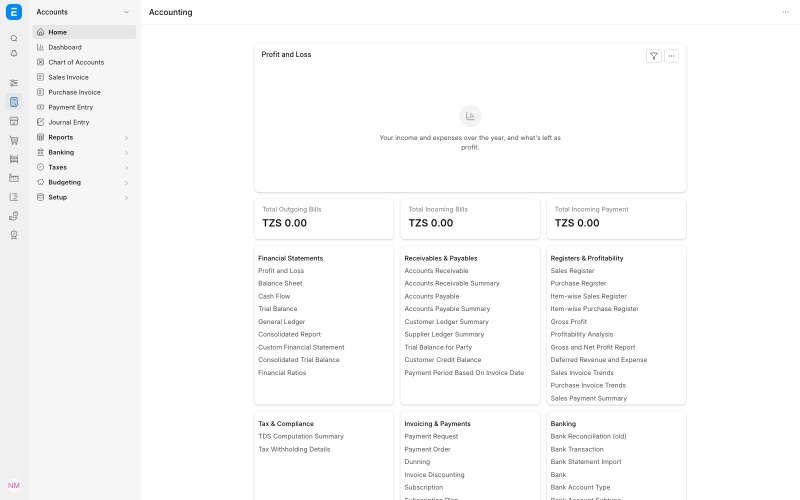
Ledgers, receivables, payables and financial statements in one workspace, in Tanzanian shillings.
Profit and loss, balance sheet and cash flow from live transactions Receivables and payables with customer and supplier ledgers Bank statement import and reconciliation
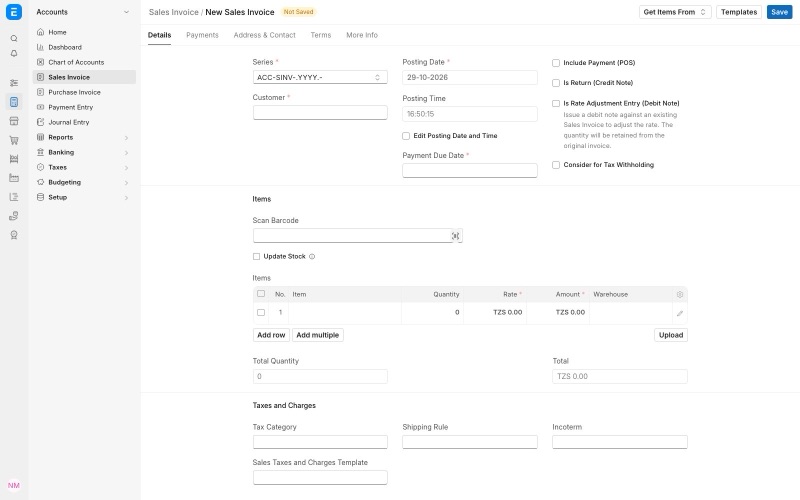
Quotations, orders and invoices that post straight to the ledger.
Items, quantities, taxes and payment terms on every invoice Tax templates applied for you, so totals stay consistent Payments matched against outstanding invoices
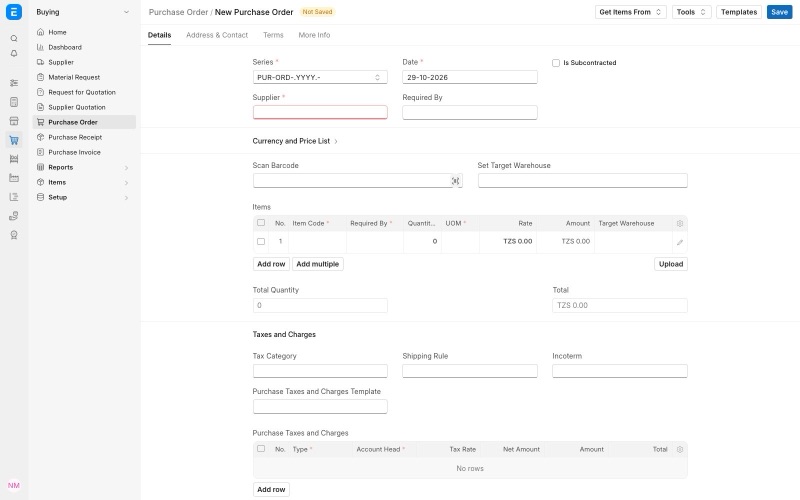
From material request to purchase order to supplier invoice, with approvals along the way.
Purchase orders with supplier, delivery dates, taxes and charges Approval steps configured to your purchasing policy Supplier invoices checked against orders and receipts
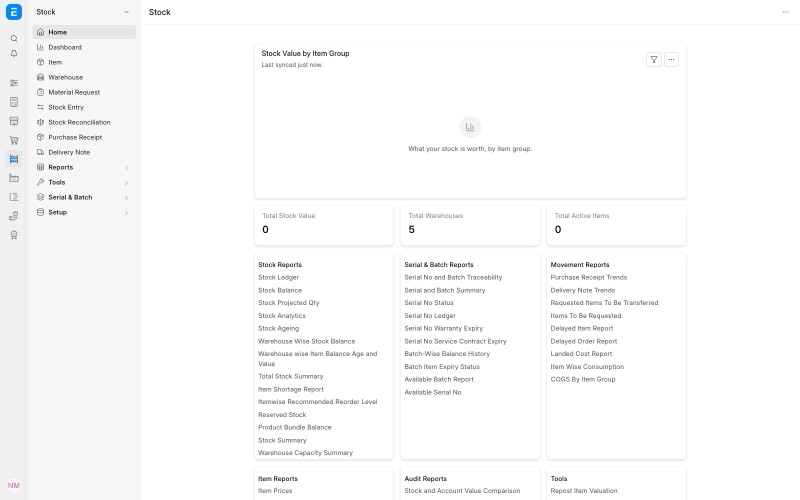
Stock value and movement across every warehouse, always up to date.
Stock ledger, balances and ageing reports Batch and serial number tracking Reorder levels per item and warehouse
Capabilities
What we deliver
Financial management
General ledger, accounts payable and receivable, bank reconciliation, multi-currency transactions and a configurable chart of accounts.
Procurement and approvals
Requisitions, purchase orders, goods received notes and supplier invoices linked end to end, with approval limits by role.
Inventory and warehousing
Stock across multiple stores and branches, batch and expiry tracking where needed, transfers, adjustments and valuation.
Sales and invoicing
Quotations, orders, invoicing and receipts, with integration options for fiscal devices and payment channels scoped per project.
Reporting
Operational dashboards and financial statements generated from live transactions rather than manual exports.
Audit trail and access control
Role-based permissions and a record of who created, changed or approved each transaction.
Engagement
What you receive
Scope is confirmed in a written proposal after discovery. A typical engagement includes:
- Process map of your current and target workflows
- Configured or custom-built ERP modules, delivered in phases
- Data migration plan with reconciliation of opening balances
- Role-based user training and administrator documentation
- Post-go-live support period agreed in the proposal
Common questions
Either, depending on fit. Where an established platform covers your needs, configuring it is usually faster and cheaper. Where your processes are distinctive, we build the parts that matter and integrate them. We recommend an approach after discovery, not before.
Yes. Phased rollouts — often finance and procurement first — reduce risk and let teams adopt the system gradually. The data model is designed for the full scope from the start so later phases do not require rework.
Integrations with fiscal devices, banks and mobile money providers are common requirements. Feasibility depends on the provider’s current interfaces and approval processes, so we confirm each one during discovery.
Yes. Each company or branch keeps its own books, its own numbering and its own users, and group reports consolidate across them. Stock can be held per warehouse and transferred between branches with a record on both sides.
Opening balances, customers, suppliers and the item list are migrated and reconciled before go-live, and the reconciliation is signed off by your finance team. Historical transactions are usually kept in the old system as a read-only archive rather than reloaded, because reloading them rarely survives audit.
The system is a web application, so a branch without a connection cannot post transactions at that moment. Where that is a real operational risk we scope it explicitly — a local instance that syncs, or offline capture for a specific step — rather than assuming connectivity.
Industries
Where this is often used
Distribution & wholesale
Inventory, order management, credit control and route sales for distributors and wholesalers.
Construction & projects
Project costing, site labour, procurement and equipment tracking for construction and project-based businesses.
Growing SMEs
Practical, phased systems for small and medium-sized businesses moving beyond spreadsheets.
Thinking about ERP systems?
Tell us what is slowing your organisation down. We will listen first, then recommend a practical next step — even if that is not a project with us.